We want to create the biggest online listing collection of Surf Spots around the world!
Please add you short stay surf spot rentals now.
What is more relaxed than paddling out on the ocean and conquer some waves ? However, it can sometimes be less relaxing to find a good surfing house that suits your needs. Bookasurfspot offers surfhouses all around the world, so that you can book your ultimate surf house within mintues!
10 Surf Spots found
List your surf spot on this page?
Add linkSurf houses and surf camps: how to find a place to stay near the right waves
A surf trip is decided by the stay more than by anything else. Book a bed an hour from the break and you spend your best hours in traffic. Book a room above the right beach and you can look at the lineup from the balcony, paddle out when the tide turns and come back for breakfast between sessions. The surf houses, surf camps and lodges on this page are all chosen for that reason: they sit close to good waves.
But close to good waves is not the whole story. A wave that is perfect for an experienced surfer can be dangerous for a beginner, and a quiet beach break can bore an expert. This guide helps you match the place to your surfing, so you arrive at the right coast in the right season.
Be honest about your level
Most surf trips that go wrong fail at this point. Before you look at a single photo, ask yourself where you really stand:
- First timers need gentle, sandy beach breaks, soft foam boards and ideally a qualified instructor. Whitewater waves close to shore are where everyone starts.
- Beginners who can stand up need slow, forgiving green waves and a spot that is not too crowded, so they can practise paddling into unbroken waves and turning.
- Intermediate surfers can handle more power and some reef or point breaks in moderate conditions, as long as they know the entry and exit points.
- Advanced surfers look for hollow reef passes, long points and heavier swells, and often for remote places reached by boat or rough roads.
Beach breaks, reef breaks and point breaks
The seabed shapes every wave, and knowing the three main types helps you read any spot description.
Beach breaks break over sand. The banks shift with storms and tides, so the waves change from week to week. They are usually the best place to learn, because falling on sand is forgiving, and they are common in places such as Portugal, France, Morocco, Brazil and much of the Australian coast.
Reef breaks break over rock or coral. They tend to be more consistent and often more powerful and hollow. Bali, the Mentawai Islands and other parts of Indonesia, the Maldives, Hawaii, Tahiti and Fiji are famous for them. The reef can be shallow, especially at low tide, so they suit confident surfers.
Point breaks wrap around a headland or rocky point and peel along it, sometimes for a very long ride. Jeffreys Bay in South Africa, Chicama in Peru and many points in Morocco, Mexico and Australia are known for long, lined up waves.
Why the season matters so much
Surf does not follow the weather at your beach. It comes from storms far out at sea, and every coast faces a different part of the ocean. As a general rule, coasts pick up their biggest swells during their own hemisphere's winter, when storms are strongest. That means the North Shore of Oahu in Hawaii, California, the Atlantic coasts of Europe and Morocco, and Japan often get their most powerful surf in the northern autumn and winter, while Indonesia, much of Australia, South Africa and Peru receive the big Southern Ocean swells during the southern winter, roughly the middle of the calendar year.
Local winds and monsoons add another layer. In Sri Lanka, for example, the south and west coasts and the east coast around Arugam Bay have their good seasons at different times of year. For beginners, the biggest months are often not the best: smaller, cleaner shoulder seasons can be ideal for learning. Ask your host which months suit your level.
Surf camp or surf house?
A surf camp usually offers a package: accommodation, meals, daily lessons or guiding, transport to the best spot of the day, and often video analysis and yoga. It is social, easy to plan and ideal for beginners or solo travellers who want to meet people.
A surf house or surf lodge gives you more freedom. You get a room or a whole house near the waves, often with board storage, an outdoor shower and a host who knows the local breaks, but you choose when and where to surf. It suits couples, friends and families, and surfers who already know what they are doing.
Lessons and board rental
Travelling with boards is expensive and tiring, so many surfers rent on arrival. Ask what the quiver looks like: soft tops for learners, longboards and mid-lengths for small days, and performance shortboards for good swell. If you take lessons, check that instructors are qualified and trained in water safety, how many students share one instructor, and whether the lesson spot is chosen each day according to conditions.
Etiquette in the lineup
Surfing has unwritten rules that keep you safe and welcome everywhere:
- The surfer closest to the peak, where the wave breaks first, has priority. Do not drop in on someone already riding.
- Do not snake, which means paddling around someone to steal their position.
- Paddle out through the channel or the whitewater, not through the path of riders.
- Hold on to your board. A loose board can seriously injure someone.
- Respect locals, wait your turn and do not paddle out at a crowded spot that is beyond your level.
Staying safe in and out of the water
Rip currents are channels of water flowing back out to sea. Experienced surfers use them to paddle out, but they catch swimmers and beginners out. If you are pulled out, stay calm, keep hold of your board and paddle parallel to the beach until you are out of the current.
Reef cuts heal slowly in the tropics and infect easily. Wear reef booties if the host recommends them, learn the entry and exit points before you paddle out, and clean every cut properly.
Sun near the equator is fierce, even on cloudy days. Use a reef friendly sunscreen, a rash vest or surf leggings, and sometimes a surf hat.
Wetsuits depend on the water, not the air. Tropical spots such as Indonesia, the Maldives and Costa Rica may need only boardshorts or a bikini and a rash vest. Cooler waters in Portugal, France, California, New Zealand, Peru and South Africa call for a full wetsuit, sometimes with boots and a hood in winter. Ask your host what locals wear in the month you visit.
Questions to ask before you book
- Which waves are closest, and are they beach, reef or point breaks?
- Which months have the best conditions for my level?
- Can I walk to the surf, or do I need a car, scooter or boat?
- Are lessons, guiding or surf transport included, or paid separately?
- What boards can I rent, and is there safe storage for my own boards?
- Are the instructors qualified, and how big are the groups?
- Are meals included, and is there a kitchen for self catering?
- Is there a doctor or clinic nearby in case of reef cuts or injuries?
- What else is there to do on flat days?
Tips for a better surf trip
Arrive a day early if you can, to recover from the journey before your first session. Watch a spot for a while before paddling out, to see where the waves break and where the locals go in and out. Drink plenty of water and plan rest days. Pack a small repair kit, spare fins and a leash, and get travel insurance that covers surfing.
Browsing the listings
The surf houses, surf camps and lodges on this page are grouped by continent, country and region, so you can go straight to the coast you have in mind. Each link takes you to the owner's own website, where you can check availability and book directly. Do you run a surf house, surf camp or lodge close to good waves? Add your link for free with the button above and help surfers from around the world find their next session.
Looking for an awesome place to spend your holiday?
Or want to advertise your houseboat, lighthouse, treehouse or glamping?
Check these links below!
Blog posts
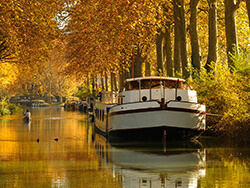
Barge river cruises in France
River cruises in France are the next luxury holiday destination. Cruise your private barge with cook down the French rivers.
Read more..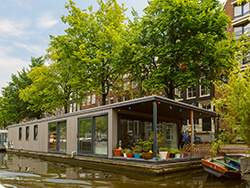
Rent a houseboat in Amsterdam
A houseboat is a great place to stay when visiting Amsterdam. Stay close to the city center but have a lot of private space.
Read more..